By Lynn Venhaus

A fantasy feminist fable that relies more on style than substance, “100 Nights of Hero” is pretty – in people and surroundings – but at times, the story feels too flimsy to be an innovative take on elevating sisterhood over the pompous patriarchy.
Of course, stoking a rebellion is a noble intention from British writer-director Julia Jackman, who adapted Isabel Greenberg’s proudly queer 2016 graphic novel into a fairy tale-adjacent narrative that’s equal parts soap opera and female empowerment.

She drew inspiration from “One Thousand and One Nights,” that Islamic classic that has Sheherazade unhappily married to a murderer who gets rid of his wives – but she lives because of telling him fantastical stories that entrance him so much he keeps her around.

We’re thrust into a vague medieval world where the men in charge keep the women oppressed and pregnant. They are forbidden to read and write. The god-like authoritarian leader, Birdman, is played by Richard E. Grant as an irritating prig. His boorish devotees wear silly papier-mâché bird’s beaks in reverence.

The outraged elders demand Cherry, a virtuous bride, and her jerk of a husband, Jerome, some sort of nobility who resides in a coveted castle, get busy procreating. They take them to task because they are not “with child,” and set a deadline of 101 days to do ‘the deed.’

Maika Monroe is the beauteous lady of the manor who hasn’t conceived yet because the self-important spouse (Amir El Masry) rebuffs her every evening before they retreat to separate quarters. But he pretends he’s virile and everything is dandy — we get a feeling that he’s not interested in girls – or anyone other than himself. Hmmm…

Manfred, a womanizing guest, is played smugly by Nicholas Galitzine, reverting to a swaggering cad role after being so charming in “The Idea of You” and “Red, White and Royal Blue.” Convinced of his irresistibility, he agrees to an odious bet with Jerome, who’s going away on hazy business.

If he can seduce Cherry, he gets her and the castle, but if not, Jerome gets Manfred’s inferior abode but has to find him a baby. That is what’s at stake as the clock ticks.

Let’s see the women revolt! However, we must wait, because the story unfolds slowly. Uneven in tone, it’s a jumble of playful camp, sauciness, turgid desire and emboldened defiance.

With its blend of a bodice-ripping scenario from ‘80s romance novels with exotic Arabian Nights from the Middle Ages for the bulk of the film, then it veers into dark, dire consequences in the third act.

Manfred tries to woo Cherry in traditional ways, and subtle flirting begins — but the courting is painfully drawn out. The attractive duo, Galitzine and Monroe, must ramp up the sexual tension because they are thwarted by social mores and manners, and writhe separately in agony. Shades of Skinemax after dark!

Another obstacle to their presumed illicit coupling is Cherry’s maid Hero (Emma Corrin, a severe, pious but clever sort.) Hero has become an accomplished storyteller, and weaves riveting tales that enchant the locals, including the guards. Hero has sized up Manfred as a wolf and therefore provides much needed distraction before he can bed milady.

As Hero is entertaining with words, pop star Charli XCX appears as an unlucky bride wearing fabulous gowns. She’s Rosa, one of three sisters who are literate, and form a secret female society who collect and record stories.

Credit costume designer Susie Coulthard and production designer Sofia Sacomani for imaginative work. They have created sumptuous worlds to go along with a storyteller’s world-building.

No one should be surprised when Cherry is attracted to Hero, which is a change from the book, because in it they’re already lovers. Suddenly it becomes clear that gender, status and power are at play – but that the women will face consequences for not only same-sex coupling but having no shame or remorse.

The cast understands the assignment – and Felicity Jones appears in a cameo, so they dutifully carry out their roles. Feminists will cheer that the women want equal rights as much as a woman-driven utopia.

However, as a unifying anthem, the film waited too long to make a bold statement– and while motivation is always welcome, why dilly-dally instead of starting the rallying cry early?

Nevertheless, give credit for showing that women can conjure their own happily ever after for themselves.

“100 Nights of Hero” is a 2025 period drama-fantasy-romance written and directed by Julia Jackson and starring Maika Monroe, Emma Corrin, Nicholas Galatzine, Amir El-Masry, Charli XCX, Richard E. Grant and Felicity Jones. It is rated PG-13 for sexual material, some bloody images and language.and runtime is 1 hour 31 minutes. It opened in theatres Dec. 5. Lynn’s Grade: C-,

Facebook Comments

By CB Adams

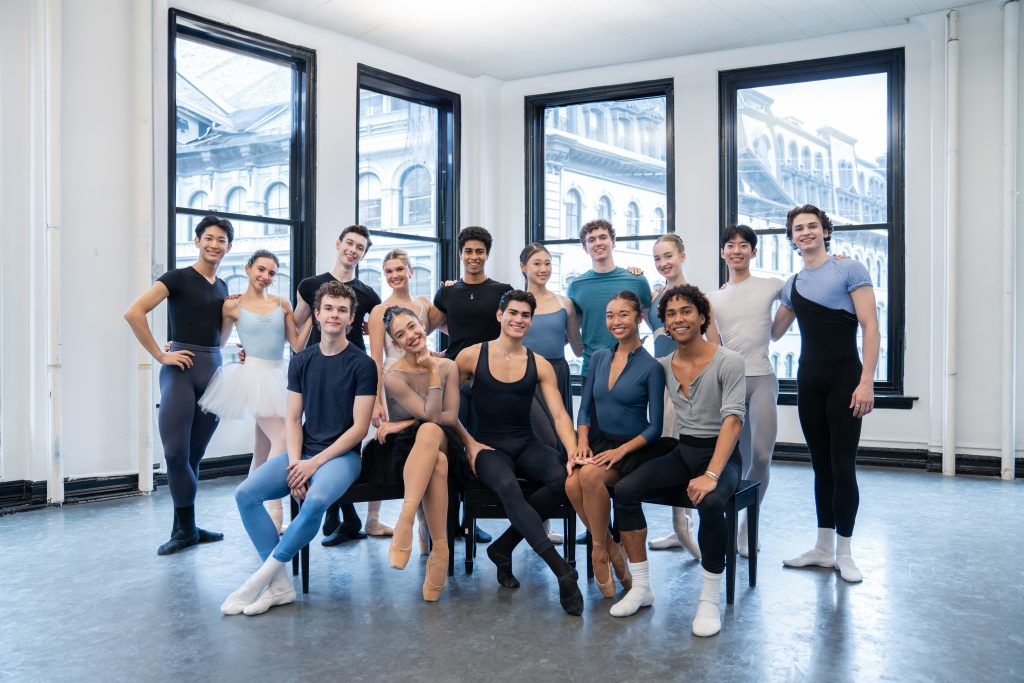
There is a particular clarity that comes from watching dancers at the moment their stage identities begin to take shape. Dance St. Louis opened its 60th anniversary season with that sense of emergence fully present, offering an evening with the ABT Studio Company that placed the focus not on promise alone but on preparedness, discipline and artistic intent. This may be the “junior” company of American Ballet Theatre, yet nothing about the performance suggested a diminutive form. These were young dancers stepping forward with conviction.

ABT Studio Company functions as the bridge between advanced training and the demands of a professional career. Its dancers, typically between 17 and 21, rehearse and tour as a unified ensemble, moving through a repertory that spans classical, neoclassical and contemporary work. The result is a rare opportunity for audiences to see dancers becoming themselves in real time — the mind, ear and body aligning in ways that cannot be rehearsed into existence.

Sascha Radetsky, former ABT soloist and the Studio Company’s artistic director, shaped the evening with an eye toward what this roster could carry. His own background, which blends Bolshoi training, long service with ABT and Dutch National Ballet, and the pop-cultural recognizability of “Center Stage” and “Flesh and Bone,” gives him a wide-angle understanding of what young artists require and what audiences intuitively absorb.

The program he assembled reflected that breadth: classical cornerstones that test line and placement, contemporary pieces that ask for nuance and stamina, and neoclassical works built for speed, musicality and ensemble cohesion. With the company currently weighted toward men, the selections were matched to the dancers’ strengths while still nudging them toward new edges.

Radetsky also situated the company within a longer tradition of generational transmission. Dance history is threaded with these handovers — Balanchine shaping dancers like Farrell and Villella, Martha Graham passing her technique through artists such as Terese Capucilli — moments when one generation prepares the next. By programming classical foundations, neoclassical challenges and contemporary commissions, Radetsky placed these dancers not simply as inheritors but as active participants in that lineage.

The evening opened with “La Bayadère (Pas d’Action),” after Marius Petipa, danced by Delfina Nelson-Todd, Audrey Tovar-Dunster, Matteo Curley Bynoe and Younjae ParkThe dancers approached the choreography with respect for its precision: Nelson-Todd shaped her épaulement with quiet assurance, and Tovar-Dunster’s port de bras carried rhythmic confidence.

Curley Bynoe brought crisp batterie and clean landings, while Park partnered with an unforced steadiness that allowed the phrases to expand. Their collective unison — sharp, clear, centered — set an early tone of readiness.

“Cornbread,” by Twyla Tharp and danced by Kayla Mak and Elijah Geolina, supplied one of the evening’s most engaging and warmly alive moments. Mak, shaped by Juilliard training and Princess Grace recognition, moved with a grounded musicality that met Tharp’s rhythmic intricacies head-on. Geolina, whose background includes competitive ballroom and television appearances, brought buoyant elevation and unerring rhythmic instinct. The Carolina Chocolate Drops score amplified the work’s earthy humor and drive. Together they created a performance that felt fully inhabited.

“Beyond Silence,” choreographed by Brady Farrar and danced by YeonSeo Choi and Maximilian Catazaro, offered a shift inward. Choi’s long, patient phrasing and Catazaro’s measured partnering gave the duet a contemplative stillness. Their suspended lines and cleanly delivered shapes created a center of quiet in a varied program.

In “Variations for Three,” by Tiler Peck, Geonhee Park, Younjae Park and Xavier Xué handled the brisk tempo and bright neoclassical coloration with an easy assurance. Geonhee articulated with precision, Younjae found lift in his jumps and Xué provided the stabilizing presence needed to keep the trio’s exchanges aligned. The result was a compact, clearly drawn demonstration of musical and technical rapport.

Xavier Xué returned to the stage for “Saudade,” by Katie Currier — one of the evening’s standout works. Commissioned by ABT Studio Company, the piece asks for a kind of emotional translucence rather than overt display, and Xué delivered. His phrasing moved with quiet elasticity, and the upper-body expressiveness — a soft back ripple, suspended arms, a held inhale before release — gave the work its atmospheric charge. It landed with a lingering gravity.

“Grand Pas Classique,” after Victor Gsovsky, brought Sooha Park and Daniel Guzmán together in a test of clarity, balance and poise. Park’s technique was finely calibrated, with balances that arrived without strain and unfolded with calm intention. Guzmán met the variation’s demands with strong elevation and steady landings. In partnering, he provided the clean frame that allowed Park’s line to extend without interruption. Their performance gave the work its intended sheen.

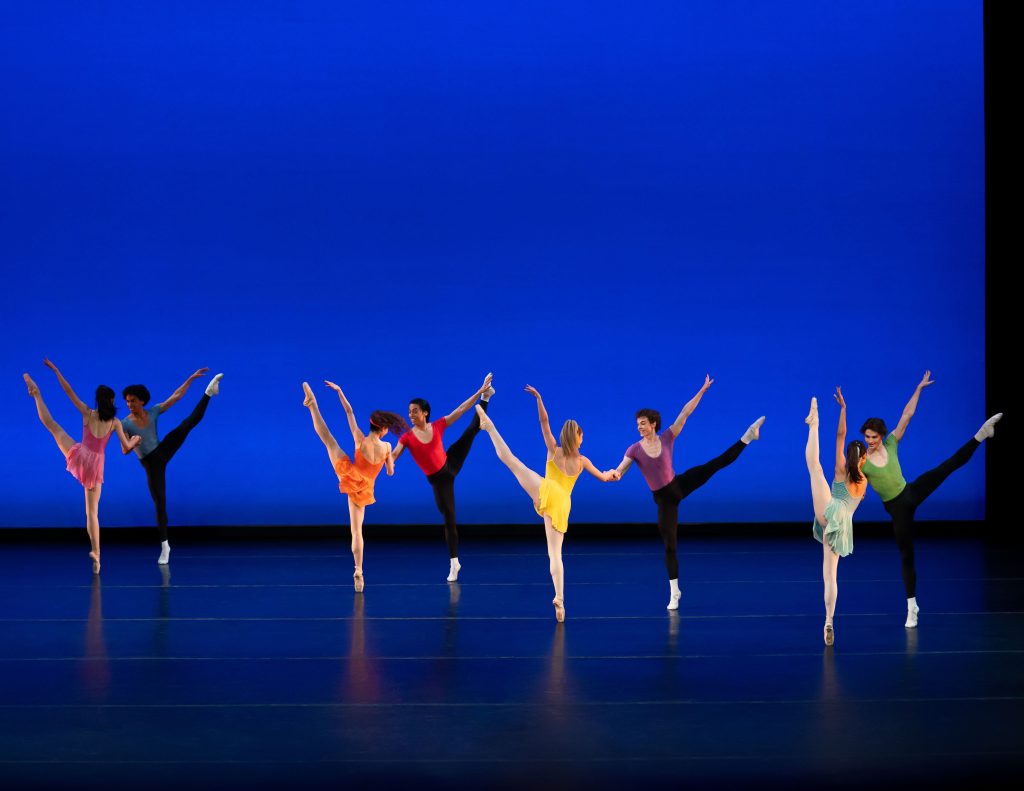
The evening closed with Jerome Robbins’ “Interplay,” shaped as a four-part suite — Free Play, Horseplay, Byplay and Team Play — performed by the full ensemble in various configurations: Maximilian Catazaro, YeonSeo Choi, Ptolemy Gidney, Paloma Livellara, Delfina Nelson-Todd, Geonhee Park, Younjae Park and Audrey Tovar-Dunster among them.

Robbins draws dancers into a buoyant mix of classical line and Broadway-inflected rhythm, and the company leaned into the blend. Free Play moved with bright rhythmic exchanges and quick-snap timing; Horseplay gave Geonhee Park room to show easy lift; Byplay found relaxed rapport among Choi, Catazaro and the company; and Team Play brought the full ensemble forward in a playful, confident finish.

The repertory itself carried notable stakes. In the pre-performance Q&A, Radetsky mentioned that Tharp had long resisted releasing “Cornbread” to dancers this young, believing the piece too demanding. Her eventual agreement, and the way the dancers met the challenge, spoke to the company’s current level.

Throughout the evening, small traces of effort surfaced — a pirouette that adjusted before settling, a landing that softened into place, an arabesque that breathed once before arriving, an ensemble line that wavered before finding its symmetry, a partnering exchange approached with a hint of caution. These were not shortcomings but moments where the dancers’ reach became visible, the line between training and profession momentarily illuminated.

Presenting the Studio Company also reaffirmed the legacy of Dance St. Louis itself — a cultural institution now in its sixth decade. Since its founding in 1966, it has brought more than 30,000 artists, 500 companies and over 150 world premieres to local audiences. As one of only four nonprofit organizations in the United States devoted solely to presenting dance, it stands as a rare survivor and a vital part of the city’s artistic landscape. Evenings like this underscore its role not simply as a presenter of great works but as a home where dance lives, evolves and continues to matter.

Dance St. Louis presented ABT Studio Company November 14-15 at the Touhill Performing Arts Center.

Facebook Comments

By Lynn Venhaus

English philosopher R.G. Collingwood said, “The only clue to what man can do is what man has done.”

That is the direction this historical drama takes as it revisits the Nuremberg trials but delves more into a psychological perspective on what led the Third Reich to invade other countries and commit Holocaust atrocities, overseeing the extermination of 6 million Jews.

Based on the 2013 non-fiction book, “The Nazi and the Psychiatrist” by Jack El-Hai, writer-director James Vanderbilt looks back through a modern lens to send an urgent message about justice, intolerance, and cruelty to contemporary audiences.

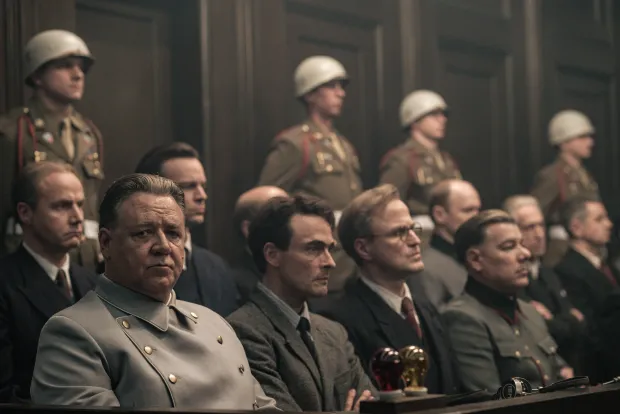
The Nazi regime had their day in court during the main Nuremberg trials, held between Nov. 20, 1945, and Oct. 1, 1946. Beforehand, the Allies prepared to unveil the horrors for the world to hear as they wanted the highest-ranking officials to answer for their war crimes.

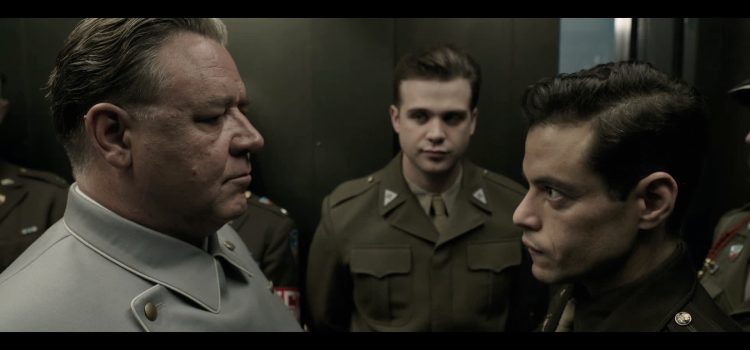
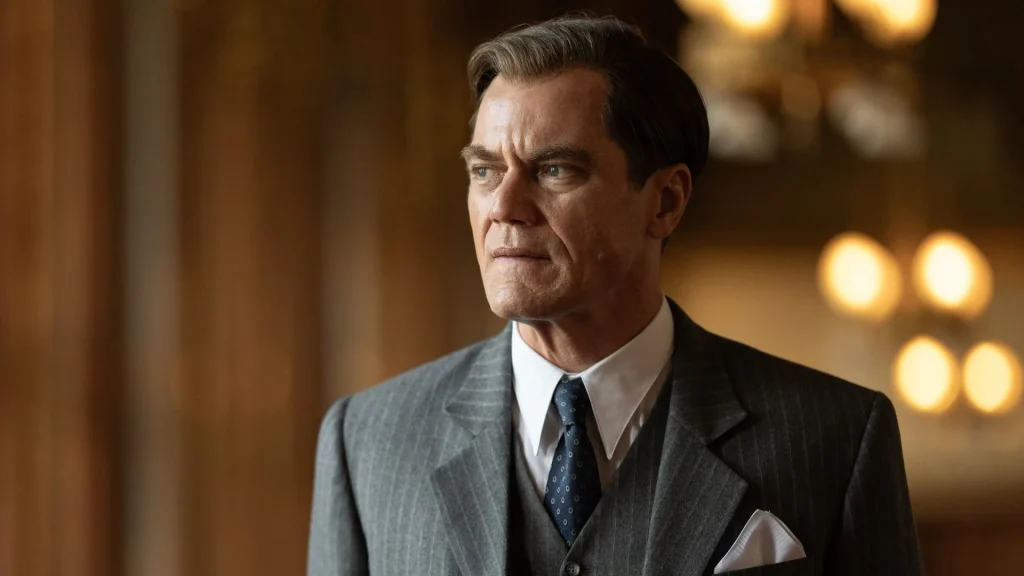
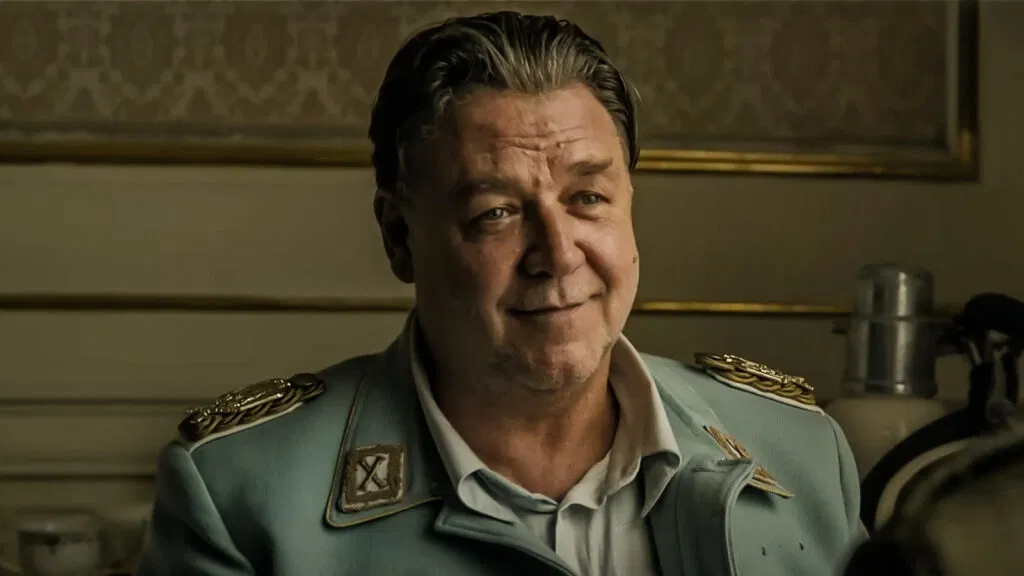
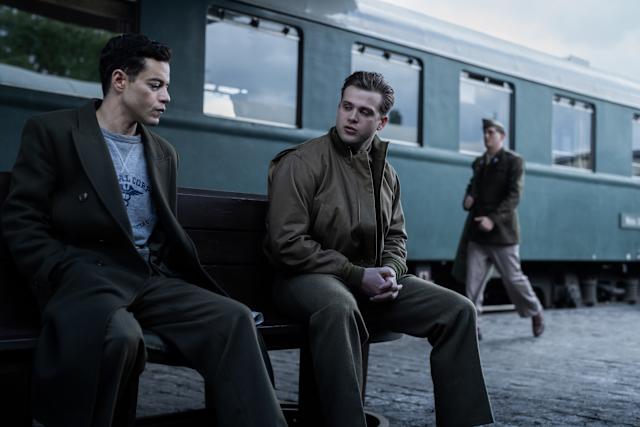
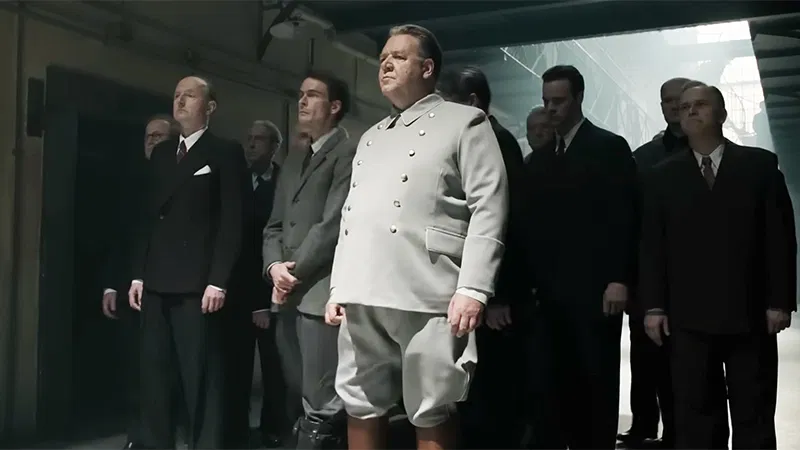
The chief prosecutor, Robert H. Jackson (Michael Shannon) wants to expose evil. Army psychiatrist Lt. Col. Douglas Kelley (Rami Malek) attempts to understand their complex psyches, and front and center is Hermann Goering (Russell Crowe), Hitler’s right-hand man.

Leading the legal team, ever-reliable Shannon portrays Jackson, who worked diligently to bring 12 members of the Nazi High Command to trial for war crimes.

While others just wanted to put the war in the rear-view mirror, and favored executing those responsible for the genocide, Jackson wanted the world to see and hear what they had done. He was responsible for this international tribunal that involved the U.S., England, France and the Soviet Union, the first of its kind.

Jackson, later a Supreme Court justice, didn’t want these ‘monsters’ to become martyrs upon their deaths. His instincts were correct, but the proceedings were not smooth because this was new territory.

How do you define evil? Oscar winner Malek stars as dedicated Kelley, an Army mental health professional tasked with analyzing Hitler’s henchmen. His methods come under fire as he appears to be sympathetic to the prisoners.

He was attempting to build trust. But really, who is trying to outmaneuver whom? It becomes mainly a cat-and-mouse mind game with malevolent Goering, not unlike Jodie Foster and Anthony Hopkins in “The Silence of the Lambs.”

Goering was second in command to Hitler, engineering the horrors of what transpired without any remorse. At the time of this trial, he was the highest-ranking Nazi still alive. (Rudolph Hess is also a fellow prisoner).

Kelley wrote a personal account in his book, “22 Cells in Nuremberg,” but the movie indicates his fall from grace, so he’s been historically ignored, until now. His book’s final chapter is a cautionary tale about how he could see the mindset of pre-World War II Germany happening in the United States.

For those who don’t believe the Holocaust happened, this film won’t let anyone forget. The stakes, past and present, should remain in the forefront.

The chess-like match between the men, especially with Oscar winner Crowe in full command, is fascinating. However the account is fictionalized, Crowe is back to displaying the power he had in his prime, igniting the screen as the cagey, cunning and diabolical Goering.

With his keen intelligence and massive ego, narcissist Goering believed he could justify his actions on this global stage, and it’s chilling to see it unfold.

The 1961 classic Oscar-nominated film “Judgment at Nuremberg,” directed by Stanley Kramer, was mostly a courtroom drama while the current film spends more time behind the scenes on the dangers of unchecked malice.

While this 2-hour, 30-minute film gets ham-fisted in its editing and bogged down in its cumbersome narrative that makes its points repeatedly, the performances are uniformly strong.

Standouts include Leo Woodall as interpreter Sgt. Howie Triest, John Slattery as Col. Burton C. Andrus, who oversaw the prison, and Richard E. Grant as Sir David Maxwell-Fyfe, who is a British co-counselor.

The film’s other strengths include period-accurate designs – production (Eve Stewart), costume (Bartholomew Cariss) – as well as cinematographer Dariusz Wolski’s interiors in ​the secret military prison and​ German homes.

The most powerful scene is what was shown at the trial 80 years ago, the same disturbing archival footage of skeletal victims at work camps being bulldozed into their graves. The six gut-wrenching minutes are from the 1945 “Nazi Concentration and Prison Camps,” which was partially shot by director John Ford and included in George Stevens’ 52-minute film.

This footage showed the world what really happened, what these Nazi leaders were capable of, and that they must be punished for their crimes.

​N​ot just a reminder of the past, the film​s​ ​strives to be clear that the prevention and proliferation of evil is always necessary. One recalls Edmund Burke’s famous quotation: “The only thing necessary for the triumph of evil is for good men to do nothing.”

Triest, the German-born translator, says at one point: “Do you know why it happened here? Because people let it happen.”

While the film doesn’t reveal anything new, it is committed to being a clarion call. People have been quoting philosopher George Santayana a lot these days — “Those who cannot remember the past are condemned to repeat it,” from his “The Life of Reason” in 1905.

The fact that we must be nudged out of complacency and realize the consequences on a global stage is the reason that films like “Nuremberg” are made.

“Nuremberg” is a 2025 historical drama written and directed by James Vanderbilt and starring Russell Crowe, Rami Malek, Michael Shannon, John Slattery, Leo Woodall and Richard E. Grant. It is Rated PG-13 for violent content involving the Holocaust, strong disturbing images, suicide, some language, smoking and brief drug content and the runtime is 2 hours, 28 minutes. It opened in theatres Nov. 7. Lynn’s Grade: B.

Facebook Comments

By Alex McPherson

An intensely gripping acting showcase for Jennifer Lawrence, director Lynne Ramsay’s “Die My Love” paints an existentially nightmarish picture of motherhood, conformity, and relationships in fateful disarray.

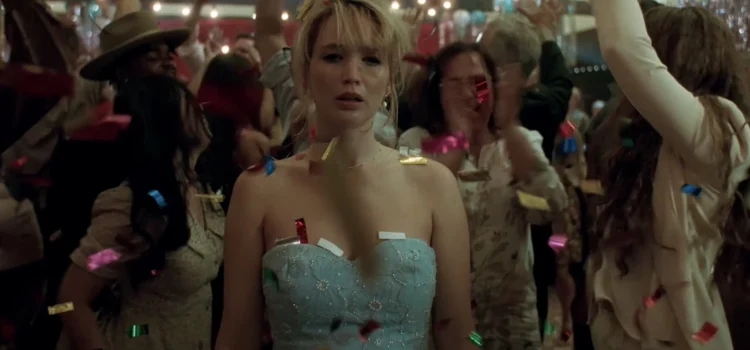
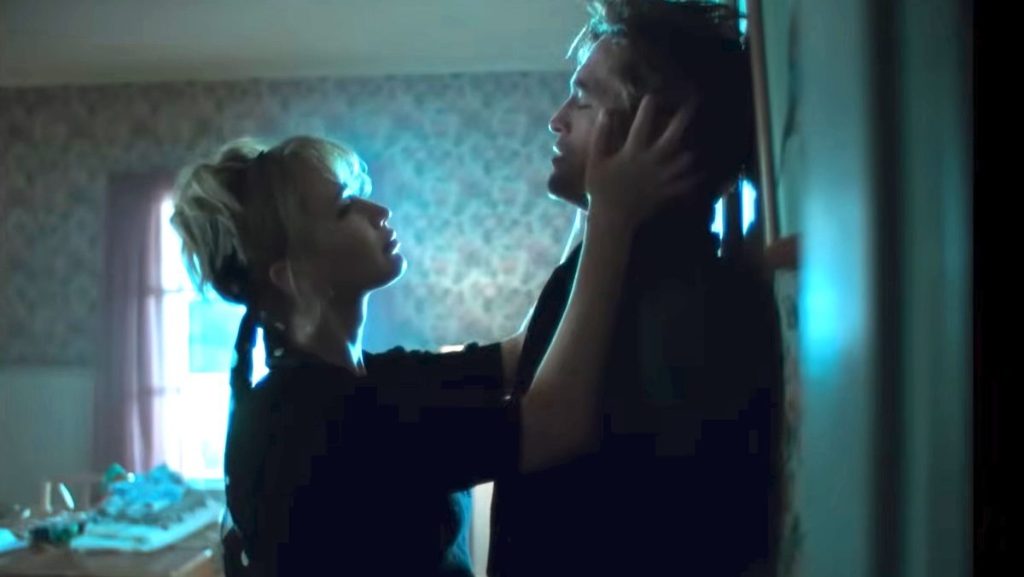
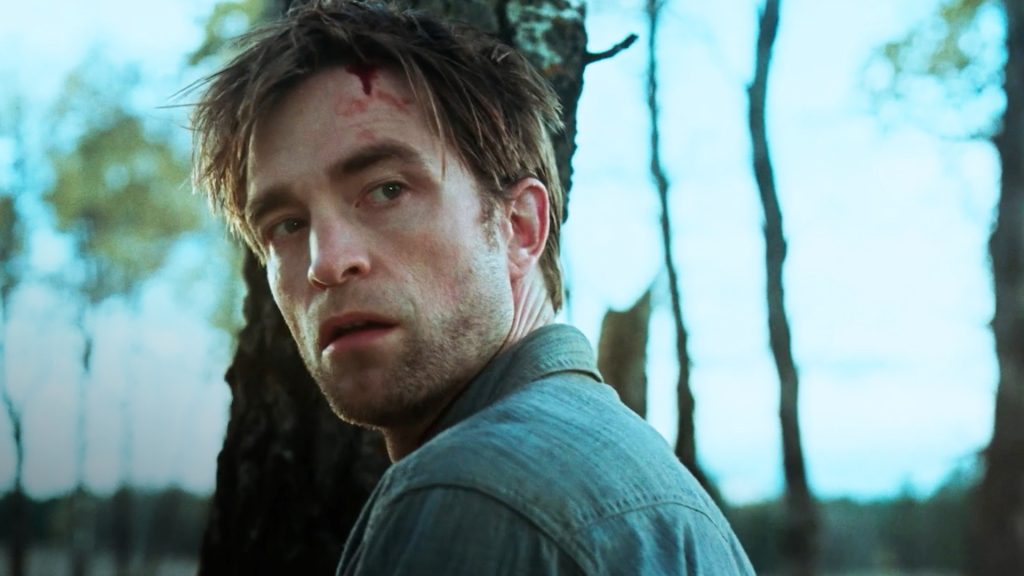
Based on the novel Matate, Amor by Ariana Harwicz, the film follows Grace (Lawrence), a free-spirited and frustrated writer who moves into an old house in rural Montana with her ruggedly handsome but insecure boyfriend, Jackson (Robert Pattinson). The house, nestled within tall grasses and fairy-tale woods, was left to Jackson by his uncle who committed suicide.

It’s seemingly a prime location for Grace and Jackson’s antics; they drink nonstop and have wild sex, fully embracing their physical passions. Before long, Grace is pregnant and gives birth to a baby boy (whom they choose not to name), forever altering the paradigms they exist within.

Grace and Jackson’s relationship begins to crumble. Jackson is away at work for suspiciously long periods, and Grace suspects him of infidelity. Loneliness, emotional detachment, and sexual frustration grow exponentially day by day, with Grace feeling abandoned even when Jackson is at home.

She crawls on all fours like a prowling dog and masterbates in the nearby woods, at one point walking through the plain’s wispy grass, knife in hand, while their son sits unattended on the porch. 

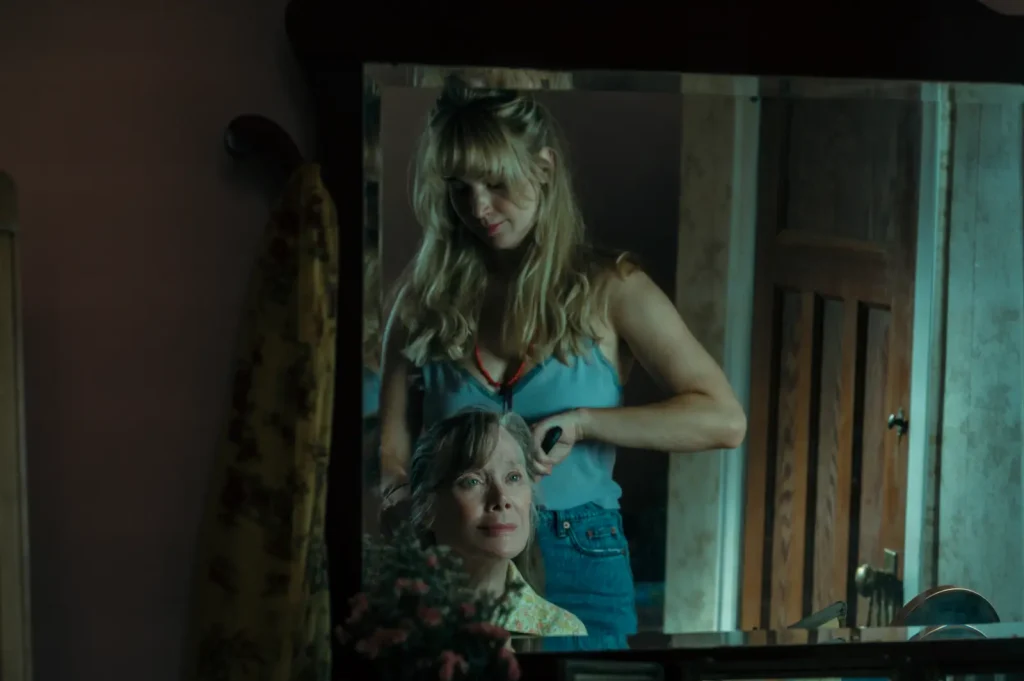
Grace’s new responsibilities and social expectations untether her present self from her former self, with troublingly extreme results. Jackson’s unstable mother, Pam (Sissy Spacek), lives nearby and is grieving her recently-deceased husband (Nick Nolte). She offers Grace some support, but Grace stubbornly refuses to accept help during her postpartum spiral. 

Jackson is also largely clueless and unwilling to change his ways. He and Grace are still drawn to each other, but they’re unable to let go of a toxic cycle of fighting and reconciliation. A mysterious biker (LaKeith Stanfield) living in the area offers the possibility for Grace to indulge her needs.

Melding sheer brutality with sequences of dreamy, sensual beauty, “Die My Love” thrives on its ethereal atmosphere and a show-stopping performance from Lawrence. She inhabits Grace with a wild-eyed intensity and crushing pathos, a woman fallen out of touch with both herself and with “civilized” society writ large. 

Ramsay, known for disquieting character studies, is a prime fit for this portrait of mental decline. “Die My Love” prizes tone over traditional narrative —we’re watching a hypnotizing trainwreck as Grace destroys both herself and her relationships.

Neither Grace nor the people in her orbit have the power to shift her trajectory; she’s as much a byproduct of postpartum depression as she is from the ways that Jackson and the world treat her in her new role as a mother. 

Seamus McGarvey’s cinematography frames the expansive yet confining landscape as foreign and disorienting. The environment often distorts as characters move through space, as if each step renders Grace further divorced from desires she feels forbidden from embracing, with other characters also struggling to find their own paths forward.

There’s a haunting, symbolic quality to the 4:3 aspect ratio and the wide-open surroundings the characters reside within: expansive and limiting, even isolating.

“Die My Love,” not completely unlike Mary Bronstein’s “If I Had Legs I’d Kick You,” does a fantastic job at submerging us into its protagonist’s mind. Ramsay’s filmmaking is at times dreamlike and other times startling in its blunt depiction of Grace’s self-destructive behaviors (animal lovers beware).

Music plays a critical role here, featuring one of the year’s best soundtracks, expressing dread as well as mournful reflection on the idealized life Grace once envisioned she’d have.

Lawrence gives a highly physical performance, from manifesting Grace’s desires through animalistic, “interpretive dance” sequences (that the film plays completely straight), to the peace she feels within the nearby woods away from civilization, and the violent self-hatred that flares unexpectedly.

There’s some bone dry humor in Lawrence’s matter-of-fact delivery. This is especially apparent during a scene where she has a “conversation” with a friendly gas station cashier, although Grace’s wit always reflects her deep-seated malaise.

The screenplay by Ramsay, Alice Birch, and Enda Walsh doesn’t provide much backstory, which puts more emphasis on the intricacies of Lawrence’s performance. Luckily, she is fully up to the task of conveying Grace’s emotional limbo.

Pattinson, not given as much to do as Lawrence, brings a shaggy insecurity that underlines Jackson’s volatility and half-hearted attempts at making amends. Like most other characters in “Die My Love,” Jackson remains unable to truly listen to Grace and understand where she’s coming from, every conversation seemingly creating more distance.

Spacek, too, does a lot with limited screen time; on some level, Pam identifies with Grace’s decline, and supports her efforts for independence even as they threaten Grace’s life.

The problem is that “Die My Love” eventually starts to wear out its welcome in Grace’s perpetual perils. Grace’s “journey” is a downhill slide that won’t stop until it’s all burned down. Ramsay’s film is disconcertingly harsh, alienating viewers through a story about alienation. And, well, isn’t that part of the point? It’s a dark, twisted vision of Hell still worth experiencing.

“Die My Love” is a 2025 psychological thriller directed by Lynne Ramsay and starring Jennifer Lawrence, Robert Pattinson, Sissy Spacek and LaKeith Stanfield. It is rated R for sexual content, graphic nudity, language, and some violent content, and the run time is 1 hour, 59 minutes. It opened in theatres Nov. 7. Alex’s Grade: B+.

Facebook Comments

By CB Adams

To appreciate the exceptional experience of “Color Into Form Into Sound” — the clarity, intimacy and high-caliber artistry within the Pulitzer Arts Foundation’s concrete calm — it helps to understand the why behind the evening.

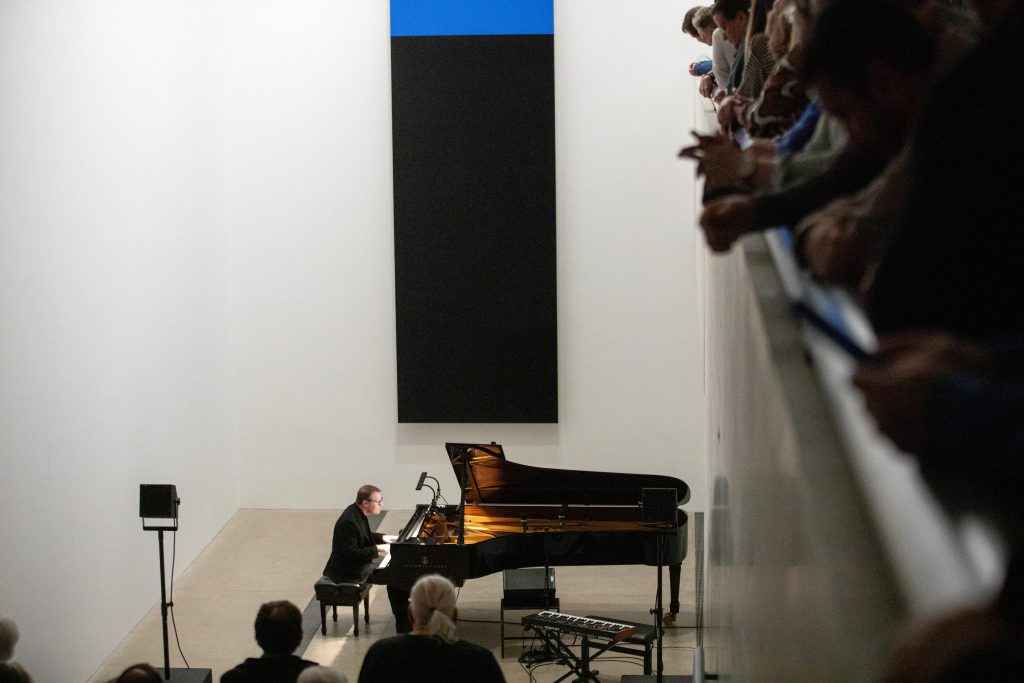
Curated by Christopher Stark, composer and professor at Washington University in St. Louis, the program invited listeners to consider how music, space and visual art illuminate one another. Inside Tadao Ando’s serene geometry, four musicians from the St. Louis Symphony Orchestra shaped an evening where sound behaved like form, breath became structure and attention felt like devotion.

As Stark shared in his opening remarks, the program grew directly from Jennie C. Jones’ listening life. Jones lives with contemporary classical music in her studio, especially works by pioneering Black composers who bridge classical lineage with improvisational energy, and she offered Stark the pieces and voices that inform her world. He spoke with admiration for how intuitively her surfaces and these sonic landscapes connect — tone, texture and resonance moving easily between gallery and score.

He also noted acoustic affinities between Jones’ layered materials, which recall studio treatments designed to address sound, and the Pulitzer’s concrete hush. A quiet echo of Miles Davis hovered in that framing — his belief that “a painting is music you can see, and music is a painting you can hear” felt beautifully at home. With that sensibility, Stark curated solo and small-ensemble works that met the room, the art and our listening with clarity and presence.

Jones’ exhibition and the Pulitzer’s tranquil architecture created a receptive space where breath and resonance felt almost architectural. Against this backdrop, the program brought together four groundbreaking voices — Carlos Simon, Alvin Singleton, George Lewis and Pauline Oliveros — each offering a distinct approach to line, rhythm and listening. Simon, Singleton and Lewis stand among the pioneering Black composers who have shaped contemporary classical and improvisational music, and Oliveros offered a complementary Deep Listening dimension rooted in awareness and breath. Heard inside Jones’ world of tuned surfaces and charged quiet, the works formed a sonic exhibition, each piece focused and individually framed, inviting the audience to lean in and listen with care.

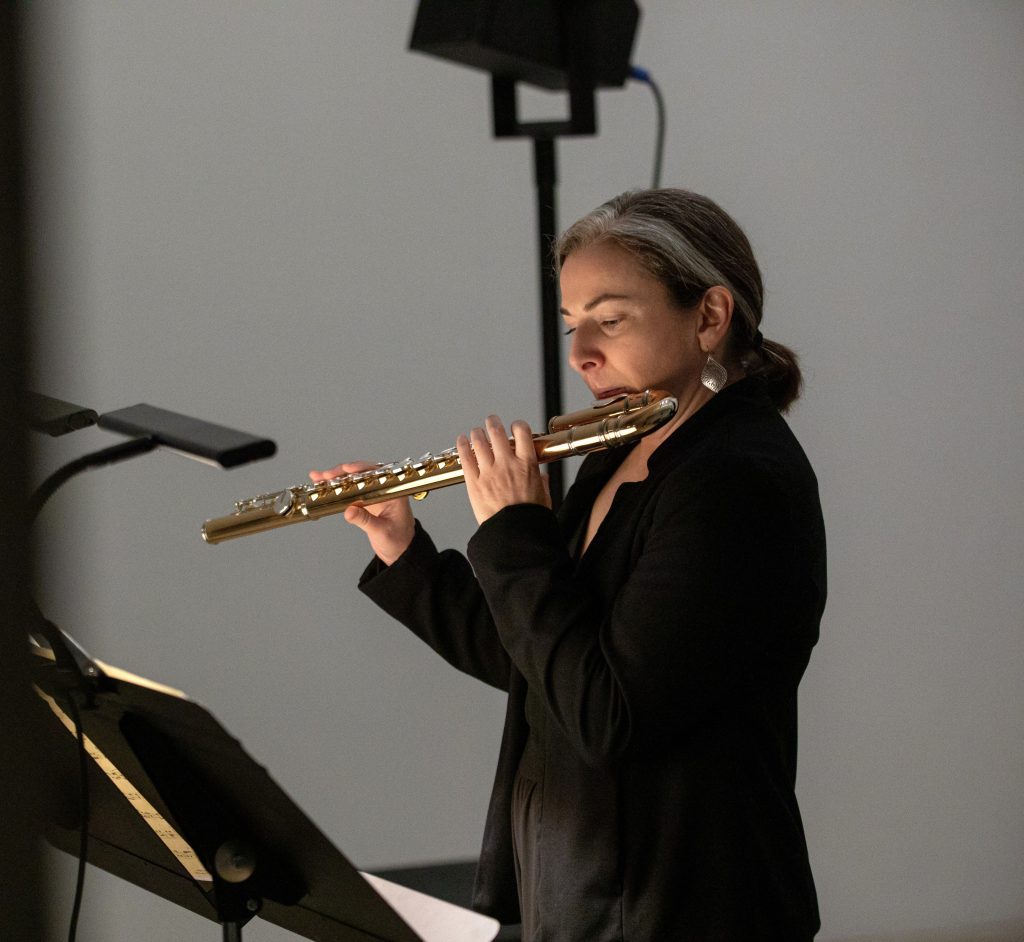
Simon’s “Silence,” performed by cellist Bjorn Ranheim, and “Move It,” played by flutist Andrea Kaplan on alto flute, revealed the physical and expressive demands of his writing. The musicians approached these works like elite athletes at peak form, shaping tone and breath with clarity and vigor. Kaplan drove through “Move It” with a stamina that felt architectural in its discipline, while Ranheim revealed taut strength beneath “Silence,” each bow stroke carrying sculptural intention. In “Between Worlds,” double bassist David DeRiso extended Simon’s sense of grounded lyricism, giving the instrument weight, lift and presence.

Singleton’s “In My Own Skin,” performed by Peter Henderson, offered a vivid demonstration of musical command — a flourishing traversal through a score that carried the room with it, idea by idea. Kaplan returned for Singleton’s “Argoru III,” shaping sound and silence with poised clarity, each gesture finely articulated.

In Lewis’ “Endless Shout,” Henderson again proved a compelling guide, allowing musical thought to move with conversational ease, alert to both structure and spontaneous color.

Oliveros’ “Horse Sings From Cloud,” performed by Kaplan, Ranheim, DeRiso and Henderson, asked performers and listeners to treat tone, breath, silence and space as equal materials. This performance felt quietly luminous, meditative and humming, the result of disciplined listening and collective trust. Silence breathed differently here, less like absence than a living medium in which sound appeared and receded. The effect was gently sublime, delivering a moment of stillness that settled the room into a deeper register of experience.

The connection between Jones’ work and these sounds lived in sensibility rather than illustration. Stark’s framing centered Jones’ listening — an invitation to imagine her in the studio with these composers sounding around her, much as one imagines Basquiat painting with Parker or Gillespie in the air. Music and art infused, each informing the other as parallel commitments to color, energy and imagination.

The gallery was full, and the audience listened with a calm, steady attentiveness that felt in tune with the room and the music — a presence that reflected both the strength of the SLSO community and St. Louis enthusiasm for programs where contemporary music and visual art meet in shared focus. Cross-disciplinary evenings like this affirm how vividly the arts speak to one another when we move among galleries, stages and concert halls, embracing perspectives shaped by diverse voices and modern compositional language.

The evening also affirmed the value of the St. Louis Symphony Orchestra’s Live at the Pulitzer series, which brings adventurous programming into conversation with contemporary art and architecture. As the final tones settled, the space held a gentle afterglow, as though the music had entered the walls as quietly and surely as Jones’ works inhabit them.

Her pieces remain on view, and the evening’s sounds may still hover in the gallery air — a testament to curation grounded in discernment and performances shaped by devotion, the kind of experience that lingers and encourages us toward the fullness of artistic experience across forms.

St. Louis Symphony Orchestra: Live at the Pulitzer performed “Color Into Form Into Sound” on Nov. 4 at the Pulitzer Arts Foundation.

Photo Credit: Courtesy of the Pulitzer Arts Foundation. Photography by Chris Bauer.

Facebook Comments

By Alex McPherson

An aggressively unpleasant experience that traps viewers within its protagonist’s tortured psyche, director Mary Bronstein’s “If I Had Legs I’d Kick You” throws us into the void and leaves us to flail. A feverishly commanding performance from Rose Byrne guides us through the pressures of parenthood and a largely uncaring world.

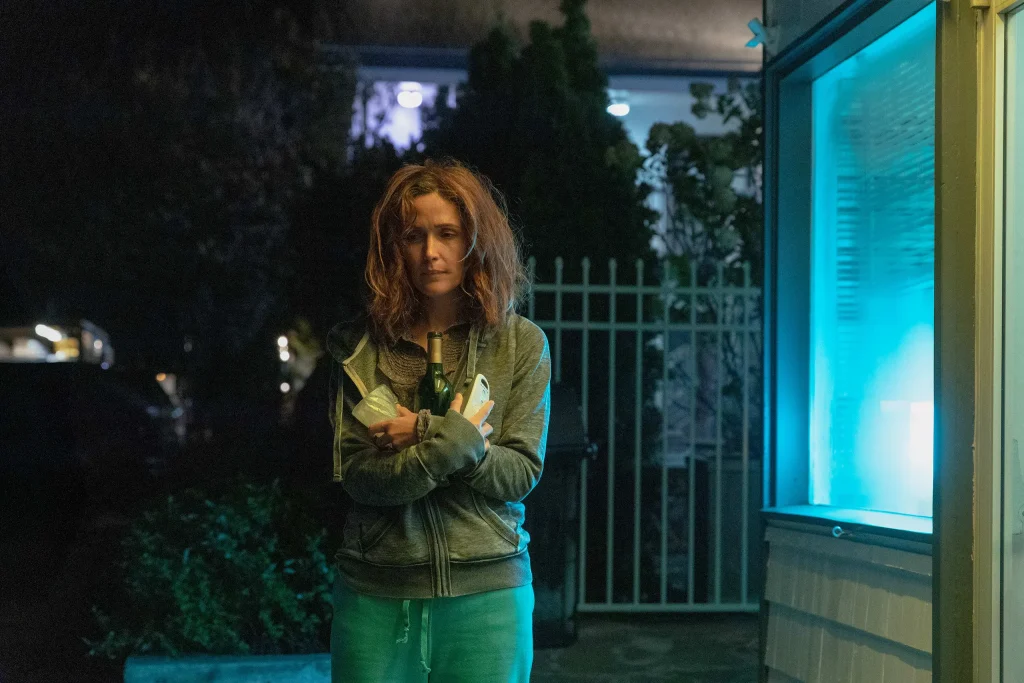
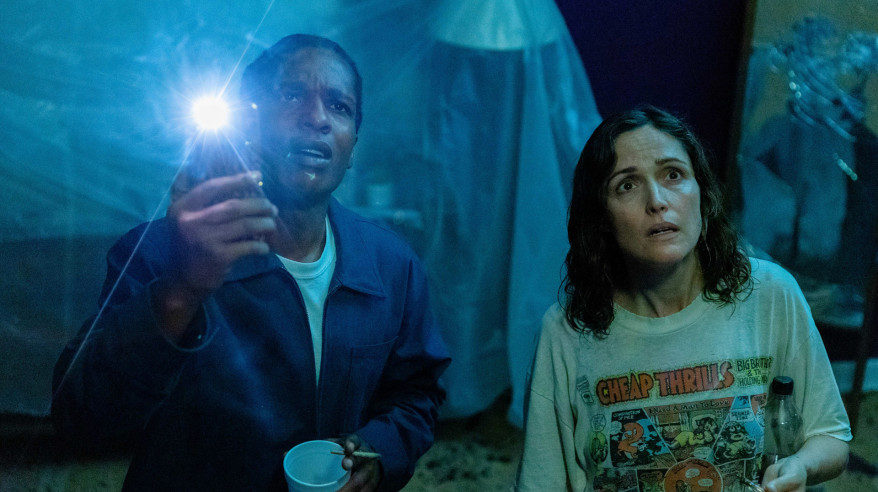
The film focuses on Linda (Byrne), a therapist in Montauk, New York, who is stretched beyond her limits. Her daughter (Delaney Quinn) has a mysterious illness that causes a severe aversion to food and requires a feeding tube apparatus that Linda maintains and monitors every night. Linda’s ungrateful husband, Charles (Christian Slater), who’s in the Navy, is away on a two-month assignment.

It is of course during this time that a leak causes their bedroom ceiling to collapse and flood the house. This gaping hole makes the house unlivable, requiring Linda and her daughter to stay in a seedy motel. It also becomes a metaphorical window into Linda’s traumatic memories

Linda desperately wants doctors to remove her daughter’s feeding tube, but a nurse informs her that her daughter is not meeting her weight requirements, and threatens to “re-evaluate the level of care” that Linda can give her. She’s scolded every day when she double-parks at the daughter’s facility.

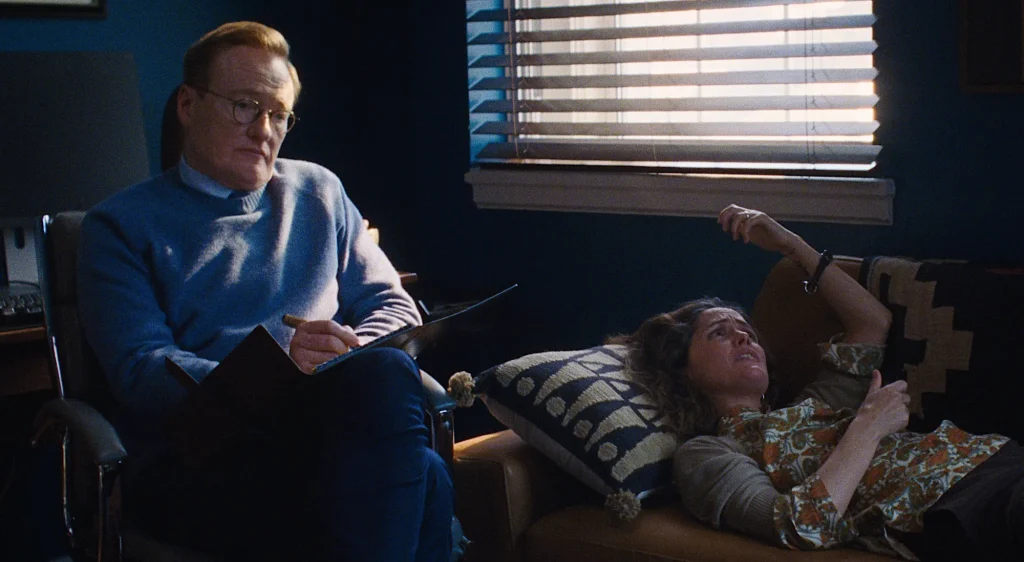
Her own patients take a toll (one of them, concerned about motherhood, is clearly on a dark path), and Linda’s own therapist down the hall (a surprisingly intense Conan O’Brien) refuses to take her swirling thoughts seriously. 

The snarky motel clerk (Ivy Wolk) refuses to sell Linda wine late at night, and the curious superintendent (A$AP Rocky) takes a liking to her and wants to strike up a friendship (which Linda immediately refuses). Everything is happening to Linda and she cannot catch a break, as barely-repressed psychological wounds resurface and send her already tenuous illusion of control veering drastically off course.

Catastrophe is around the corner, and Linda — lacking any clear support system — is headed right towards it.

Definitely not all sunshine and rainbows. Through Linda’s perpetually escalating crises, Bronstein explores the crushing psychological weight that Linda faces in every avenue of her life, trapping Linda in a version of Hell that she feels guilty for existing within. Bronstein’s film firmly roots us in Linda’s world, forcing us to view it through her eyes and never providing a sense of catharsis or release. I

t’s an exhausting watch (with an overlong runtime), but its maximalist stylings are viscerally, hauntingly tangible. Byrne’s performance is so strong, and heartbreaking, too, that no matter how intentionally off-putting “If I Had Legs I’d Kick You” gets, it’s difficult to look away.

Byrne  inhabits her  character, who makes impulsive, often questionable decisions that leave her paralyzed despite being constantly in motion. Linda is a complicated, emotionally fractured presence who’s on edge from frame one, barely holding on to her sanity as proceedings grow further frenzied.

Byrne’s comedic chops are put to use through Linda’s acerbic wit, yet we can see the damage being wrought upon Linda’s mind as she code-switches from role to role, trying, unsuccessfully, to keep her mounting dread at bay.

Bronstein keeps the chaos level high from start to finish, with cinematographer Christopher Messina (also the DP on Josh and Benny Safdie’s “Good Time”) remaining uncomfortably closed-in on Linda. This lends a palpable, subjective sense of peril to her actions; we’re seeing her struggles through her eyes.

Sound design plays just as big a role here — we never actually see Linda’s daughter’s face. Instead, we hear her nagging demands and meltdowns off-screen like a burdensome creature that requires Linda’s constant attention.

Sequences within Linda’s house have a horror-esque feel, complete with impressively effective jump-scares, disorienting visual effects, and the mocking, ironic jingle that plays whenever Linda’s office door opens. 

Indeed, “If I Had Legs I’d Kick You” is an alarming cacophony of noise and stress punctuated with bursts of pitch-black humor and sobering poignancy. Parenthood, depression, skewed gender dynamics, isolation, and the pressure that therapists feel are all under Bronstein’s magnifying glass — confronting aspects of motherhood, especially, that aren’t typically portrayed in media, and that people are often too nervous to address. 

The main issue with “If I Had Legs I’d Kick You” is that it starts at such a high key that there’s little crescendo throughout the 113-minute runtime. The domino effect of issues grows almost comical at times (poor hamster), and, after a while, the film starts to spin its gears and become repetitive — complete with a grueling finale that’s both inevitable and deeply distressing.

Still, Bronstein’s film shines as an acting showcase and a manifestation of pure, no-holds-barred cinematic panic. You might just feel completely drained afterwards.

“If I Had Legs I’d Kick You” is a 2025 psychological drama written and directed by Mary Bronstein and starring Rose Byrne, A$AP Rocky, Christian Slater, Delaney Quinn and Conan O’Brien. It’s runtime is 1 hour 53 minutes and it is rated R for for language, some drug use and bloody images. It opened in theatres Oct. 31. Alex’s Grade: B+

Facebook Comments

By Alex McPherson

A nail-biting exploration of the selfishness and deep-seated class enmity afflicting our doomed species, director Yorgos Lanthimos’ “Bugonia” grips from its opening frames and never lets go, even as it grows increasingly, thoroughly unhinged.

Based on the 2003 South Korean film “Save the Green Planet!,” “Bugonia” follows Teddy (Jesse Plemons), a disheveled and emotionally scarred beekeeper working a low-level warehouse job for the pharmaceutical company Auxolith.

The company is managed by the performative, media savvy CEO Michelle Fuller (Emma Stone), whose face appears on magazine covers and who claims to support her employees while stripping them of work-life balance. 

Teddy, who has done his own research, believes that wealthy elites are destroying humanity and the planet. Reasonable, right? Well, not so much. He asserts that they are “Andromedan” aliens, and that he must stop them from wiping us out. Michelle might provide an opportunity to enact his master plan.

With help from his neurodivergent cousin Don (Aidan Delbis), Teddy hatches a plan to kidnap Michelle. If Michelle is an alien, they will force her to beam them into her mothership before the next lunar eclipse so that Teddy can negotiate with her leaders to let humanity be. 

Donning cheap Jennifer Aniston masks and syringes, the pair nab Michelle and lug her to their dingy basement for interrogation, shaving her head and slathering her with anti-itch cream for good measure.

Michelle is, understandably, quite shaken, and confused about what exactly Teddy and Don are ranting about. The clock is ticking for both her and her paranoid kidnappers as the eclipse draws near.

It’s not a particularly rosy view of humanity, and one that Lanthimos — ever the provocateur — packs full of his signature twisted sensibilities that dare viewers to follow along or get the hell out.

Lanthimos and screenwriter Will Tracy present a disquieting allegory for the ways our (very American) communication has broken down amongst each other.

Indeed, “Bugonia” is a relentless but, ultimately, cathartic experience as proceedings swiftly descend into all-out madness, with lead performances that stagger in their intensity and commitment to the plot’s every twist and turn. 

Plemons is startlingly compelling as Teddy, who has gone so far down the rabbit hole of conspiracies and personal vendettas that he’s a ticking time bomb, driven by rage, fear, and a search for purpose.

He believes he’s the savior of Earth while he succumbs to his neuroses, every hitch in his plan emboldening him to act more violently and rashly.

Plemons is frightening and unpredictably cruel in his portrayal, yet Teddy never becomes an outright monster. 

Lanthimos and Tracy paint Teddy as someone wronged by corporations and the lies they spew. He is consumed with grief, self-loathing, and hatred of the “elites” he feels have set the planet on a spiral towards doom.

He acts out on beliefs that are both absurdist and based in emotional truth, rendering his decisions darkly funny and deadly serious, even tragic. 

Stone, too, brings layers to Michelle that complicate our feelings towards her scene to scene. She’s an almost comically condescending character thrust into a situation seemingly beyond her control–that is, until she learns how to manipulate her captors.

She plays into their frayed headspaces in an attempt to regain agency, save herself, and deliver her own cutthroat retribution for the wrongs they committed against her and her “kind” at large. It’s a performance on par with her Oscar-winning turn in “Poor Things”: she maintains a calculated, sometimes vicious edge even in Michelle’s most powerless moments.

Equally strong is Delbis in his feature film debut. Don is trapped within Teddy’s conspiracy-driven world and sees Teddy as his only support and someone who can potentially free him from the hardships of his reality. Don feels that he has no choice but to follow along, although Teddy’s reckless and cruel treatment of Michelle makes him increasingly guilty and frightened.

Shreds of compassion break through, along with a gradual realization of the monstrous actions that he and Teddy have taken. Through Delbis’ superb performance, that bubbling inner turmoil is palpable.

“Bugonia” presents little hope for these characters. Nearly every bizarre conversation (including with a creepy, bumbling cop played by Stavros Halkias) is based in manipulation and misdirection over understanding, the constant sense of ulterior motives and trying to gain the upper hand without meeting the other party on their level.

(L to R) Emma Stone as Michelle, Aidan Delbis as Don and Jesse Plemons as Teddy in director Yorgos Lanthimos’ BUGONIA, a Focus Features release. Credit: Atsushi Nishijima/Focus Features

There’s little common ground, and what common ground exists is paved over with different terrain, which reflects America’s condition in 2025. Through this, Lanthimos shrewdly, and effectively, observes the end of “truth” as we know it. 

The film is stylistically crisp yet abrasive, with Robbie Ryan’s wide-lensed cinematography opting for extreme close-ups and angling to reflect ever-shifting power dynamics. A memorably jarring score by Jerskin Fendrix, plus creative use of Chappell Roan and Marlene Dietrich, enhances the film’s gonzo atmosphere

Add to this an ending that ranks among the most twisted (and horrifically beautiful) in recent memory, and “Bugonia” is a wild viewing experience — making up for broad-strokes commentary with exceptionally tense filmmaking, gasp-worthy set-pieces, and outstanding performances.

It’s an understatement to say that the film is not for everyone, but, in its pessimistic glory, it stands among Lanthimos’ most engagingly disturbed efforts yet.

“Bugonia’ is a 2025 dark comedy-sci-fi film directed by Yorgos Lanthimos and starring Emma Stone, Jesse Plemons, Aidan Delbis and Brad Carvalho. It’s run time is 2 hours, 15 min., and it is rated R for bloody violent content including a suicide, grisly images and language. It opened Oct. 31 in theatres. Alex’s Grade: A-

Facebook Comments

By Lynn Venhaus

An extraordinary work of vision, power and poetry, “The Brothers Size” is one of The Repertory Theatre of St. Louis’s finest achievements to date.

Because of a cohesive collaboration between some of the most talented artists in St. Louis, this spiritual exploration of brotherhood and the black male experience has a dramatic impact that may leave you emotionally spun and moved to tears.

Directed with grace and deep understanding by multi-hyphenate Jacqueline Thompson, Metro Theater Company’s artistic director and winner of multiple St. Louis Theater Circle Awards for acting and directing, this gritty tale is staged in a lean, deliberate manner.

This immersive triumph is enhanced by the muscular choreography of Kirven Douthit-Boyd, artistic director of Saint Louis Dance Theatre; the memorable music composition and sound design of Tre’von Griffin and David A. N. Jackson; and the atmospheric lighting of Jayson Lawshee.

Nic Few as Ogun and Christian Kitchens as Oshoosi. Photo by Jon Gitchoff.

Their artistic vision, along with other artisans behind-the-scenes and the dynamic performances of Nic Few, Christian Kitchens and Donald Jones Jr., make this an unforgettable presentation.

They strived to make this resonate emotionally and do so in waves, for it grows in intensity and richness. Artistic consultant LaWanda Jackson and dramaturg Taijha Silas helped make that happen.

In his signature lyrical style, playwright Tarell Alvin McCraney, who won an Oscar for the screenplay of “Moonlight,” unfolds a common man story, with heart and humor, in the Louisiana bayou, which he wrote 20 years ago.

He examines the complex bonds of family, how love and loyalty affect relationships, the ripple effects of crime and punishment, systemic racism, and the hard road to healing.

Christian Kitchens and Donald Jones Jr. Photo by Jon Gitchoff.

Nic Few is big brother Ogun, a responsible, hard-working auto mechanic whose younger brother Oshoosi (Christian Kitchens), has been released from prison. He’s restless, impulsive, trying to carve out a new life.

Can they reconnect or will the youngest return to his old habits when his ex-con friend Elegba (Donald Jones Jr.), his former cellmate, comes by for visits.

Ogun is tough on Oshoosi, annoyed by his swagger and aimlessness, and that chafes his little brother. It’s complicated when the oldest wants stability and the youngest is content to be carefree, tempted by a friend who’s a bad influence.

The brothers are eager to succeed, but they tussle often, like many siblings. Their temperaments are different – Few embodies fierce physicality and weighted down by the world and Kitchen imbues his part with musicality and a lightness of being.

Photo by Jon Gitchoff.

The charming Elegba seems to want the same things but actually is a detriment to Oshoosi and Ogun’s goals. Ogun is suspicious but Oshoosi is faithful. Are we our brother’s keeper?

The effects of incarceration and the never-ending fight to be free, to make something better for their futures, shape this raw portrait. When danger lurks, they wrestle with decisions (Shades of “Nickel Boys.”)

Few, Kitchens and Jones corral an electrical charge to deliver honest characterizations that are physically and emotionally demanding. Their chemistry personifies their close ties. They are natural in their interactions – arguing, goofing off, trash talking, soul-singing, dancing and expressing their feelings.

Thompson was determined to find entry points for everyone watching, illuminating what could be considered abstract elements. The trust between everyone is obvious, their artistry elevated through her guidance.

Photo by Jon Gitchoff.

The minimalist staging, with action taking place within a circle, is reflected in Kristie C. Osi’s costume design, Jayson Lawshee’s scenic design and Eric William Barnes’ props design.

A regional premiere, “The Brothers Size” is the first time one of McCraney’s plays are staged in St. Louis. Considered a modern-day fable, “the script includes stage directions in the dialogue to heighten the encounter between the actor and the audience.

McCraney was inspired by the Yoruba people of West Africa – their rituals and religion, so he incorporated symbolism. His stylistic choices are rhythmically distinctive, seamlessly blending verse and conversation. In his original way, he aims for a mythical quality, making it about something larger than our daily lives. That adds a potency and an urgency.

The first show this season in the Steve Woolf Studio Series, it’s a play that was made for the intimate space and the series, praised for its risk-taking. The former artistic director, who retired in 2019 after 33 years at The Rep and died during the pandemic in 2021, encouraged theatregoers to be adventurous with newer works and unknown playwrights. What a fine legacy.

Photo by Jon Gitchoff.

Opening night bristled with electricity, the kind of buzz that marks a big deal event. After this profound, gut-wrenching experience, the audience leapt to their feet as soon as it ended, with an outpouring of love and thunderous applause. It was indeed a moment (well, several).

“The Brothers Size” boldly represents The Rep’s vision and demonstrates their commitment to produce works of daring imagination and transformative symmetry with exceptional casts and crews.

The Repertory Theatre of St. Louis presents “The Brothers Size” from Oct. 22 to Nov. 16 as part of the Steve Woolf Studio Series in the Emerson Studio of the Loretto-Hilton Center, 130 Edgar Road, St. Louis.

The play is 90 minutes without intermission. A post-show discussion follows the performance on Sunday, Nov. 2, at 2 p.m.

To purchase tickets, visit www.repstl.org or call the box office Monday through Friday noon to 5 p.m. at 314-968-4925.

Photo by Jon Gitchoff.
Facebook Comments

By Lynn Venhaus
Stylish but slow and shallow, “Ballad of a Small Player” is an underdeveloped and overproduced drama that drowns in its own pretentions.

Despite its visual splendor, the storytelling is scattered and too surreal to sustain interest. A mystifying misfire from director Edward Berger, it’s disappointing because his two previous films were Oscar nominees for Best Picture – the international winning feature “All Quiet on the Western Front” in 2023 and “Conclave” in 2024. He knows how to frame a narrative – the conundrum is do we want to spend nearly101 minutes on this one?

Colin Farrell plays an addict, liar, thief and fraud masquerading as a high roller with a fake aristocrat name, Lord Doyle, hiding out in the opulent gambling mecca Macau, and trying to score. He plays baccarat wearing a lucky pair of leather gloves.

Doyle is really Reilly, and he is wanted for swindling an old rich woman out of her life savings. He is trying to escape his past, but with self-destructive tendencies, he makes reckless decisions and is spiraling on his way to rock bottom.

Sweating profusely, a portrait of desperation, he’s also a ticking time bomb with heart issues — drinks too much, eats too extravagantly and smokes (even when he’s having chest pains). He continues to live large while the wolves are at the door. Why not give us a reason to care if he can put his life back together?

Somehow, he is given grace by a casino floor manager, Dao Ming, who turns out to be an angel of mercy. As delicately played by Fala Chen, she’s a mysterious, kindred spirit who recognizes a fellow lost soul. (Does this remind anyone of “Leaving Las Vegas”?)

Dao Ming explains The Festival of the Hungry Ghost in Hong Kong, and screenwriter Rowan Joffe ties his streak of good fortune to a ghost story. This mystical turn adds another bizarre twist. Is it instead a dance with the devil?

The plot thickens — or rather falters. Joffe’s script, adapted from a 2014 novel by Lawrence Osborne, has too many unexplained occurrences. He seems to rationalize it to luck or wizardry, messing with dream-like with time and place. And do we really need another gambler’s one-last-time trope? Yawn.

Joffe has danced around spiritual, moral and philosophical entry points that are merely teases. Brief nods to the seven deadly sins appear but are not satisfyingly threaded to make an impact.

Farrell has become one to watch, especially after his tour de force as Oswald “Oz” Cobble in the HBO mini-series “The Penguin” (and the movie “The Batman”), as well as his superb Oscar-nominated turn in “The Banshees of Inisherin.” He’s accomplished at playing a smooth talker at the end of his rope, and this performance is intense.

While he has played likeable scalawags before, he has been more appealing as a rude hitman in “In Bruges” and as a gangster coach in “The Gentlemen,” because this wheeler-dealer is pathetic.

In an obscure, shadowy role, the always aces Tilda Swinton plays yet another quirky character in her canon of peculiar portrayals. She is Cynthia Blithe, a debt collector hot on Reilly’s tail, but he calls her Betty. (If you haven’t checked out by the time the credits’ roll, there is a strange dance she and Farrell do. Just because, I suppose.)

Alex Jennings coyly plays Adrian Lippett, a cryptic figure who owes Reilly money, and is always looking for a deal himself.

The enigmatic storytelling takes a back seat to the striking colorful aesthetic. Macau, a former Portuguese colony that’s a special region of the Republic of China, is a glitzy, glamorous neon-drenched adult playground that is luxuriously packaged, in James Field’s cinematography and Jonathan Houlding’s production design.

They are so meticulous in beautiful textures, it seemed like a nod to Wes Anderson’s visual style. Friend won an Oscar for his work on “All Quiet on the Western Front,” and he dazzles again.

Ultimately a letdown, “Ballad of a Small Player” doesn’t pay off, despite skilled artisans at work. In the words of Notorious B.I.G.: “Mo Money, Mo Problems.”

“Ballad of a Small Player” is a 2025 drama directed by Edward Berger and starring Colin Farrell, Tilda Swinton, Fala Chen and Alex Jennings. It is rate R for language and suicide, and its runtime is 1 hour, 41 minutes. It is currently in theaters and streaming on Netflix beginning Oct. 29. Lynn’s Grade: C-.

Facebook Comments

By Lynn Venhaus

Marked by twists, turns and a “Twilight Zone” flair, Albion Theatre Company’s latest whip-smart production “I Have Been Here Before” ponders the construct of time in a shrewd yet abstract way.

An adroit ensemble of six piques our curiosity, each one developing layers of their characters’ personalities and motivations. They seamlessly embody different classes, all at crossroads (whether they realize it or not).

The Black Bull Inn in Grindle Moor, part of the remote Yorkshire countryside, is where the story takes place in 1937. Set designer Rachel St. Pierre has fashioned a cozy, modest parlor, with Brad Slavik the astute set builder and Gwynneth Rausch specific in appropriate time-period props.

They have effectively set the period and place, so that co-directors Robert Ashton and C.J. Langdon were able to keep the characters on the move, so they weren’t as stodgy as they probably were nearly 90 years ago.

The six accomplished performers were notably well-rehearsed with distinct dialects and physically nimble in their mannerisms, driving the story with more verve than playwright J.B. Priestley’s dated drama indicated.

Photo by John Lamb

Today, the show hasn’t aged as well or is as suspenseful as an Alfred Hitchcock classic or even an Agatha Christie drawing room mystery. The set-up in the first act is intricate and lengthy, then has more engaging action in second act, while the third act teeters on implausible. Nevertheless, the sheer will and the skills of the actors make this watchable.

Priestley continued his fascination with theories of time here; one of the 39 he wrote. “Time and the Conways” and “Dangerous Corner” were among his most successful plays about time – he wrote seven.

He believed different dimensions could link past, present and future, and philosophizes, using Russian teacher P.D. Oupensky’s theory of eternal recurrence, which are life circles or spirals.

Robert Ashton and Anna Langdon are the reliable Sam Shipley and Sally Pratt, father and daughter innkeepers. He’s amiable, she’s pragmatic in their portraits. They are expecting three guests while a quiet but agreeable young headmaster, Oliver Farrant (Dustin Petrillo), is already spending a vacation there, for a rest. He relaxes by reading and going for long walks.

The upcoming holiday is known as Whitsuntide, around the time of the Christian holy day the Pentecost. In the south of England, it was the first official holiday of the summer (until replaced in 1971).

Photo by John Lamb

But the guests that reserved the rooms have cancelled. That allows a foreign guest, professor Dr. Gortler, (Garrett Bergfeld) and a wealthy businessman and his stylish wife, Walter and Janet Ormund (Jeff Kargus and Bryn McLaughlin), to book separate rooms.

Tall, gruff and exiled from Nazi Germany, the mysterious professor has already startled Sally by practically predicting future outcomes. He seemed to know who would be staying and not who originally booked rooms.

Are they thrown together by chance or is it on purpose?  That is one of the many questions raised as the plot thickens. It is rather odd that somehow, they seem inter-connected. Their decisions could have consequences that would affect others.

There is a nagging feeling that they may have lived through this experience before. But how could that be? The cosmic undertones seem to rattle some cages, especially suspicious Sally.

 An expert in math and science, Gortler is blunt at asking perceptive questions, revealing predictions, and shares a precognitive dream describing preposterous occurrences between everybody there. Dun dun dunnn!

Photo by John Lamb

Quite surprising is an assured, imposing performance by Garrett Bergfeld as the enigmatic professor. It’s been 20 years since he stepped on a stage, and one hopes it will continue.

Dustin Petrillo, who is always authentic in his portrayals, displays emotional depth and an unmistakable connection with Mrs. Ormund, who is unhappy with her workaholic – and alcoholic – husband.

Petrillo and Bryn McLaughlin worked together beautifully as husband and wife in “The Immigrant” at New Jewish Theatre two years ago, and they smoothly convey an ease with each other.

As restless Janet, McLaughlin contrasts her comfort with Farrant by showing unease with her inattentive husband.

Jeff Kargus is striking as the swaggering Ormund, used to getting what he wants and believably upper crust in speech and movement. He commands the stage, appearing as a manipulative mover and shaker, giving off shady vibes. One wanted to know more about these puzzling people.

Photo by John Lamb

As impressive as the actors are, so is the creative team that collaborated on a well-worn look, including the aforementioned scenic/prop designers. Costume designer Tracey Newcomb, whose work is always memorable, has economically created status in her ideal apparel choices. Lighting designer Eric Wennlund and sound designer Leonard Marshell set the mood well.

In 1970, rock group Crosby Stills Nash and Young released an album, “Déjà vu,” including a song of the same name.

If I had ever been here before
I would probably know just what to do
Don’t you?
If I had ever been here before on another time around the wheel
I would probably know just how to deal
With all of you

It later ends with the lyric, “We have all been here before” repeated several times. (“It’s déjà vu all over again,” in the words of an epic St. Louis philosopher-raconteur Yogi Berra.)

I was frequently reminded of those lyrics, as the play attempted to explain unnatural phenomenon. Had it followed through with a more convincing ending, it would have stuck the landing, but this is an observation in hindsight 90 years later.

Priestley worked with what was known at the time, and his own viewpoint on another life ahead as a do-over. Food for thought, to be sure.

In their customary fine fashion, Albion presented an unfamiliar play effectively, driven by excellent performances and strong contributions by local artisans.

 Albion Theatre presents “I Have Been Here Before” Thursday through Saturday at 7:30 p.m. and Sundays at 2 p.m., on Oct. 23-26, 30-31; Nov. 1-2 at the Black Box Theatre at the Kranzberg Center, 501 N. Grand in Grand Center. The show runs 2 hours, 30 minutes, with two 10-minute intermissions. For more information: albiontheatrestl.org.

Facebook Comments